
Retinoids/Vitamin A & Moisturiser
Retinoids/Vitamin A
The latest skin trend - what is it and should I use it?
Retinol, retinal, retinyl, tretinoin retinaldehyde, retinoate are all part of the Vitamin A family. Using a vitamin A product can reverse signs of aging! A big claim but there are lots of scientific evidence to prove it's claims. However, it doesn't happen overnight and can take a little while for your skin to get used to it. Your skin can become quite irritated when you start. It is a product that helps resurface your skin and stimulate collagen production. Which means your skin looks plumper/hydrated, glowing, less lines and smoother. So the pay off is good...
This product is not for young skin. I would suggest from age 30 upwards. It comes in varying strengths and I would suggest starting with the lowest strength and building up - be patient. It is important to follow the instructions, as you can react to this product easily. I would start by using vitamin A product after your skin has been cleansed at night time and then adding your moisturiser. I would not start using the product everyday either. A rule of thumb is to apply it to your decade ie in your 30s use 3 times a week, in your 40s use 4 times a week and so on. Because of the nature of this product, facial waxing and being out in the sun can make your skin reactive. It is really important to wear sun protection and to inform your therapist regarding any treatments you may want.

Moisturiser
This is the last step of a night time routine and penultimate step before applying sun cream for daytime routine. I remember watching adverts for oil olay face creams growing up and believing this was all that you needed. But as I have said before, with time ingredients have changed and what was important has changed. I would spend more money on serums than a moisturiser but I would still definitely use one. A moisturiser locks in all the other products, which is why it goes last or just before sun protection. There are 3 types of moisturiser: (in order of thin to thickest)
Humectants - for oilier skins
Emollients - for dry skin
Occlusives - treatment for skin conditions like eczema
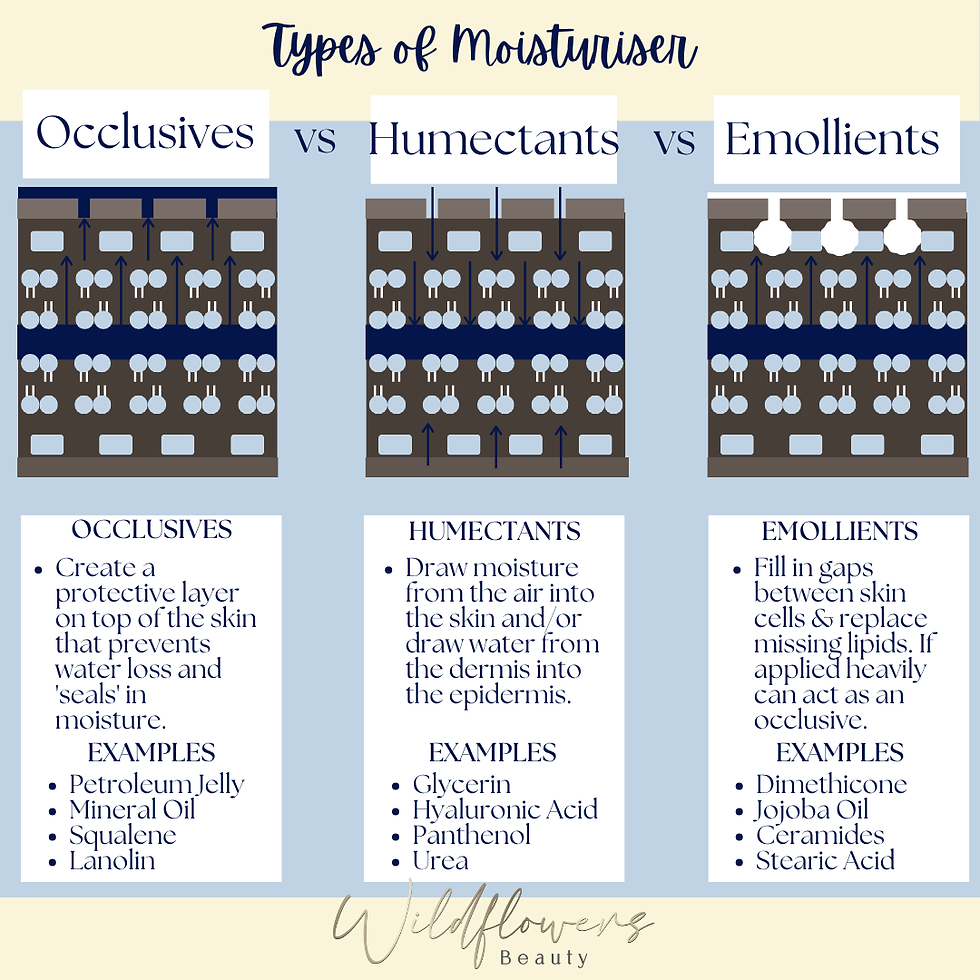
I use an emollient type moisturiser as I have dry skin and it does also contain active ingredients that I use in my serums. If on a budget, I would spend more on the serum and get a more basic moisturiser. You can use day moisturiser, as your night moisturiser. However, now I'm middle age and have more signs of aging on my face I also use a night moisturiser. I'm under no illusion that this will reverse my aging signs but they will help to slow the aging sign process, providing I look after myself and follow the full routine. If there was a shortcut, I'd share it but there's not.
Like most things in life, it requires effort and intention and there will always be the odd few exceptions (people with perfect skin who do nothing) because there always are.
This series outlines the basic products to use for a skincare routine. There are many different ingredients that can be a valued addition ie moisturiser with spf but it doesn't replace the need for sun protection. This is simply because you'll add moisturiser where you need it and all of your skin needs spf. Also the spf is a bonus add on and not necessarily a broad spectrum sun cream that offers full protection from UVA and UVB rays. Whilst a cleanser may contain lactic acid it's not the same as applying an acid to your skin. Think about what you want to achieve and invest in the products accordingly.
I hope this has given you an insight into skin care products, their roles and why having a routine is is important. If you are coming in for facial treatments, to truly see results your home care and how you look after your skin/body counts too. If you put all your hope in one cream, you'll be disappointed because you need to look at the overall picture. Having great glowing skin is amazing but it doesn't happen by chance (apart from a few perfect people). If you'd like to start your journey, book in a consultation or message me - I'd be happy to help.


Comments