
Skin - biology
Updated: Aug 1, 2025
Skincare basics
As a beauty therapist, there is a lot of information out there regarding skin care alongside a gazillion products to buy… so how do you (the consumer) know what to buy and whom to trust, what’s just marketing and what is actually real?
So, I thought I’d start with…
What is skin and why is it so important?
Skin is our largest body organ, and I think when compared to other organs like heart, liver etc it is often overlooked, seen as unimportant or vanity. However, our skin is important and much needed for our overall health and wellbeing. We’d be dead without it.
What makes it important?
Our skin has different functions and is a complex organ.
1. Skin covers our body – it is our protection. It forms a barrier between the rest of our body/organs and the outside world. It is waterproof but can also absorb…
2. Temperature Regulation – it allows our body to cool down and allows our body temperature to increase too (think sweating and goose pimples)
3. Not only does our body excrete sweat for cooling, but it can also excrete waste products
4. Our skin can absorb vitamin D, synthesising it from sunlight
5. Our skin can absorb the products we put on our skin
6. Skin produces melanin to protect us from the sun but that doesn’t mean we don’t need SPF
7. Skin allows sensory feelings like touch, cold/heat
8. Skin heals itself
What is skin?
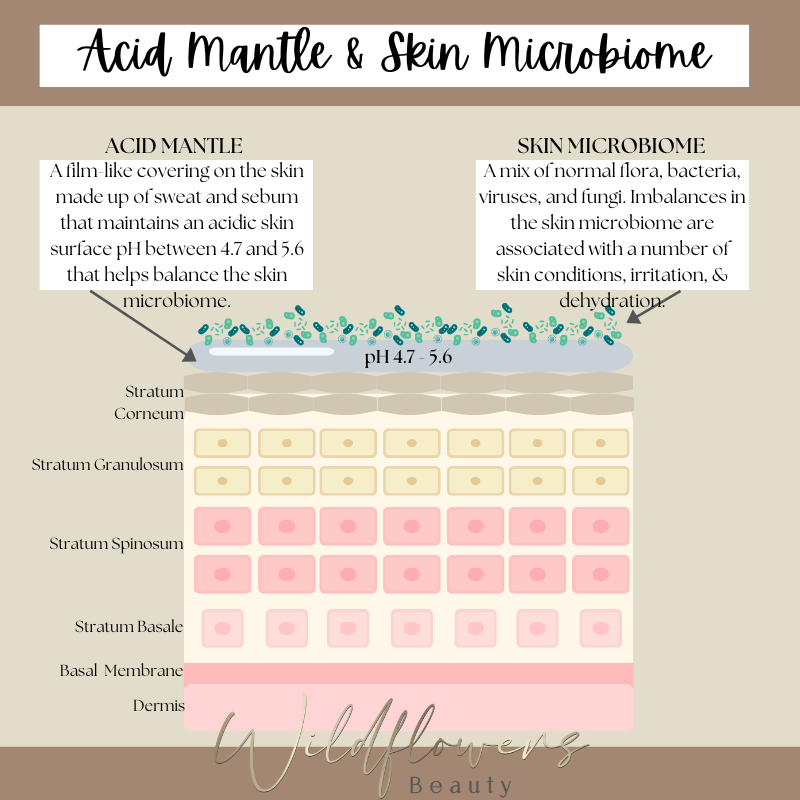
Skin has many layers and is divided into 3 main sections/layers – the epidermis, the dermis and the subcutaneous.
The skin barrier
At the very top of the skin's surface lies a protective barrier called the acid mantle - stratum corneum. This is a very thin barrier made from sebum and is acidic. It protects the skin by creating a barrier to stop bacteria and toxins penetrating the skin. If the skin barrier is damaged, it can let in bacteria and irritants causing our skin to react.

Epidermis
This is the outer layer and this is the section that our skincare routine products will target. This is made from 5 layers, the base layer and then the tissue grows up through the layers to the surface, where they will then shed. This growth cycle is faster when we are younger. As we age, our skin can look dull, as the process takes longer, which is why we add exfoliation products to our routine to help speed up the process and make our skin look more youthful.
Dermis
This section contains blood vessels, nerves and connective tissues. This section is where we get touch from (nerves). This section also contains hair follicles and pores, allowing us to regulate temperature, via sweat and oil to protect the skin. The connective tissues are elastin and collagen – which have huge amounts of press regarding anti-ageing. When we are young, these tissues are full and as we age they start to break down faster and along come wrinkles and dry skin. To treat this layer of your skin, you need more than the beauty counter at your preferred store can offer. Products working in conjunction with treatments are good but standalone they will not penetrate this layer.
Subcutaneous
The inner layer is where the fat and connective tissues are and sits above muscles. Yes, you’ve guessed it, as we age this layer becomes thinner and therefore the smoothness lessens. It also means you start to see veins and bruises that you couldn’t see before…

Is all skin the same?
No, not all skin is made equal and by this, I mean the skin on your face is different to the skin on your body or feet for example, because it needs to do different jobs so the skin thickness will vary. That is why one cream will not be suitable for everything. Also, men’s skin is generally thicker and so will need different products to females, as they have different needs. And… skin tone – whilst yes, our skin is made up of 3 main layers/sections, differing thicknesses and differing melanin levels means darker skin, will have different needs to those of white skin. Therefore skin colour will affect what products are best suited to your skin.
All clear as mud now?
The mini biology lesson is to explain that skin is a complex organ, and a one size approach does not fit all. The routine that you loved when you were younger is not going to work forever. Your skin changes and product ingredients also change. One cleansing soap for the whole family? No, because you each have different needs. The product that worked great for your friend/influencer you love? Great they found what works for them, but for your skin and your needs - not necessarily.
On top of that, Britain has seasons, so our skin needs change throughout the year. We can combat heatwaves to freezing temperatures, indoor heating to aircon, strong winds and heavy rains impact your skin. If you’ve been ‘burning the candle at both ends’ your skin need will change. If everything is going right in your life, you may no longer need the treatments you used to use on your skin, as it has now repaired.
Now you may be understanding why there are so many products out there and why there is so much advice. The best thing, you the consumer can do, is understand your skin type and needs. I’m planning to write a series on skin care to help you understand more regarding products and treatments. I also offer facials from 30mins upwards where there will be a full skin consultation. By having a facial consultation, it takes out the guess work and you have a qualified trained therapist explain your skin and its needs to you.



Comments